LBRY Block Explorer

LBRY Claims • videoplayback

b55a72204c0a1784def0825e90a606da156c691b

Published By
Anonymous
Created On
11 Jul 2020 12:54:01 UTC
Transaction ID
Cost
Safe for Work
Free
Yes
The Mysterious Lost City of the Kalarahi Desert of southern Africa Jan 3, 2020
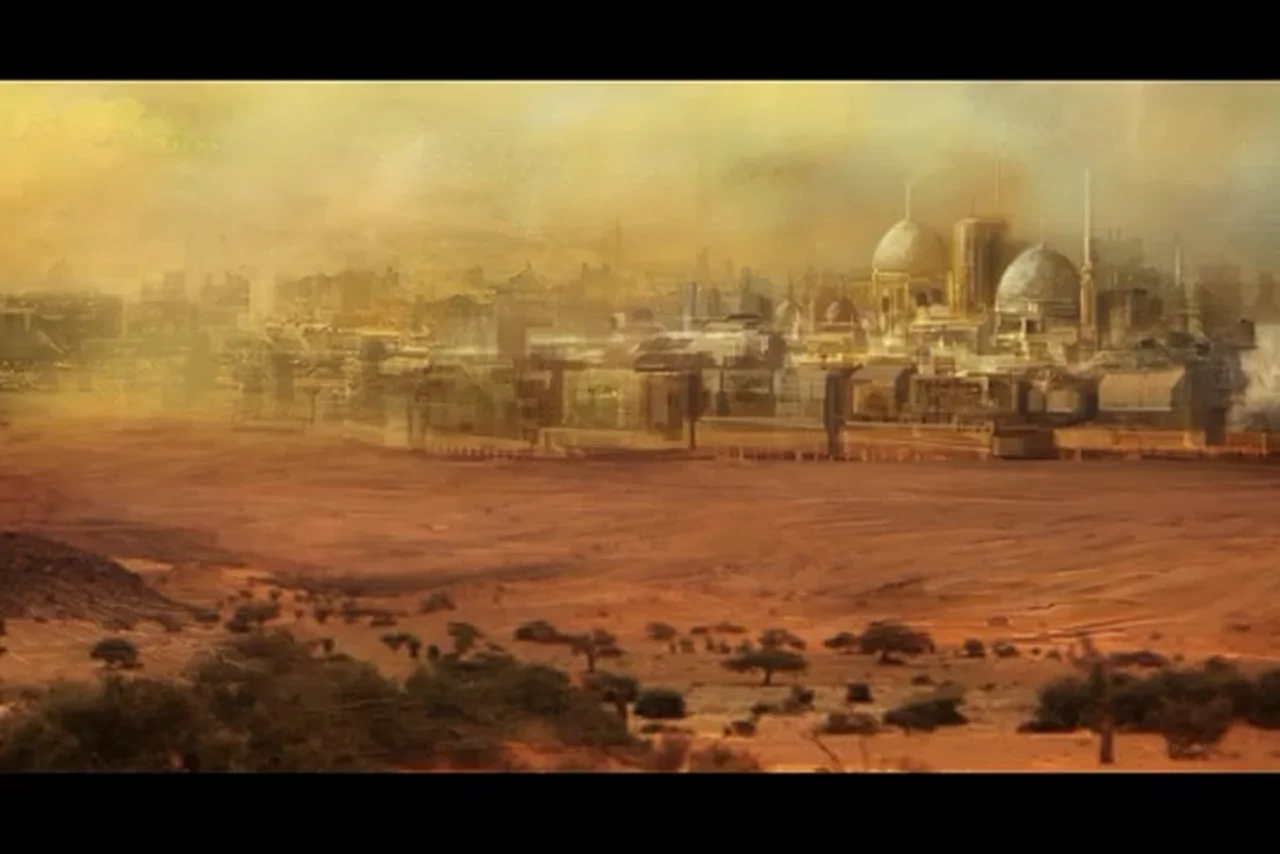
The Mysterious Lost City of the Kalarahi Desert of southern Africa Jan 3, 2020 <br />[The origins of mankind have been found in South Africa and this tribe the Khoisan predate Adam by 195,000 years.]<br />Lost City of the Kalahari: Experts Search for Traces of Ancient Desert Civilization<br />Today, the Kalahari Desert is known as a very dry place. The word Kalahari in fact comes from a Tswana word which means ‘great thirst’. As a result, it seems an unlikely location for an ancient city. Nonetheless, there is a legend that the ruins of a lost city lie somewhere within the ancient sand-sea, waiting to be discovered.<br /><br />Origin of the Legend<br />In 1885, an American entertainer turned explorer named William Leonard Hunt traveled to the Kalahari under the pseudonym, Guillermo Farini. He traveled with a team that included his son Lulu.<br />While traveling through the semi-arid wasteland, Farini is said to have come across what appeared to be ancient ruins consisting of large stones held together by cement and stone walls, which formed semi-circular structures. He also looked for any symbols or evidence of a writing system but found none. Farini claimed that this represented the remains of a lost civilization which had once existed in the Kalahari Desert.<br /><br />Kalahari Desert, Namibia, Africa. Source: Dmitry Pichugin / Adobe.<br /><br />Early Searches for the City<br />Farini’s alleged discovery sparked immense interest among explorers. Over the past 130 years, at least 30 expeditions have gone into the Kalahari Desert in search of this lost city . So far, nothing has ever been found, not a single brick or broken potsherd.<br /><br />One problem that complicated these early searches was that Farini left very few notes or details as to the exact location of what he found. Furthermore, he said that it was half-buried and thus would be difficult to recognize in the first place. This made the prospects of actually finding the ruins in the midst of a vast sea of sand and rocks, which describes large sections of the Kalahari Desert, akin to finding a proverbial needle in a haystack.<br /><br />Red sand dunes stretch as far as the eye can see--and beyond--in Africa's Kalahari Desert. (Paolo D'Odorico / Public Domain )<br /><br />City Ruins or Natural Feature?<br />In 1964, an explorer and academic named A.J. Clement retraced what he believed to be the actual route of Farini. He did not find any remains of human settlements , but he did find unusual rock formations made of dolerite. Dolerite is a mafic, intrusive igneous rock that has a grain size intermediate between basalt and gabbro.<br /><br />Dolerite often occurs in dikes, which are geologic formations where molten rock cut through older rocks to create potentially wall-like structures. The rock that makes up a dike is often stronger than the surrounding country rock, so the country rock will erode leaving just the dike. The dikes of some rocks, like dolerite, will form blocky, wall-like segments which to the untrained eye may resemble ancient city walls.<br /><br />Rock Art Rituals: Namib Desert Engravings Provide Fascinating Insight into Ancient Initiation for Girls<br />Ancient Comet Sightings Inspired, Frightened, Dazzled, and Baffled Past Astronomers and Star Gazers<br />Ruins of Loropeni Shed Light on Ancient Gold Trade and Are Thought to Hold More Mysteries<br /><br />Dolerite rock formations in the so called Lost City of Kalahari. (MGA73bot2 / CC BY-SA 3.0 )<br /><br />A.J. Clement suggested that Farini may have come across an unusual rock formation made of dolerite, possibly an exposed dike, and may have mistaken the formation for a man-made structure. A.J. Clement also believed that most of the Kalahari was much too dry to have been the site of a civilization for at least the last 15,000 years.<br /><br />The Search Continues…<br />Expeditions continue to this day. Two of the most recent expeditions were launched in 2013 and 2016. In 2013, a search was done through a research project called the Marcahuasi Project which used Google Maps to assist them in finding any anomalies that could represent artificial structures. This search was probably the most high-tech search so far but turned back nothing that was indisputably from a lost city. <a href="https://www.ancient-origins.net/ancient-places-africa/kalahari-0011966" target="_blank" rel="nofollow">https://www.ancient-origins.net/ancient-places-africa/kalahari-0011966</a><br /><br />Video courtesty of The Real MLordandGod <a href="https://youtu.be/xwdXD84fhUo" target="_blank" rel="nofollow">https://youtu.be/xwdXD84fhUo</a>
Author
Content Type
Unspecified
video/mp4
Language
English
Open in LBRY