LBRY Block Explorer

LBRY Claims • The-Republic-Part-7

c819875f7f05eaffb07ef5c4bea6b78d73fa3e7d

Published By
Anonymous
Created On
22 Apr 2023 14:14:01 UTC
Transaction ID
Cost
Safe for Work
Free
Yes
The Republic (7/10)
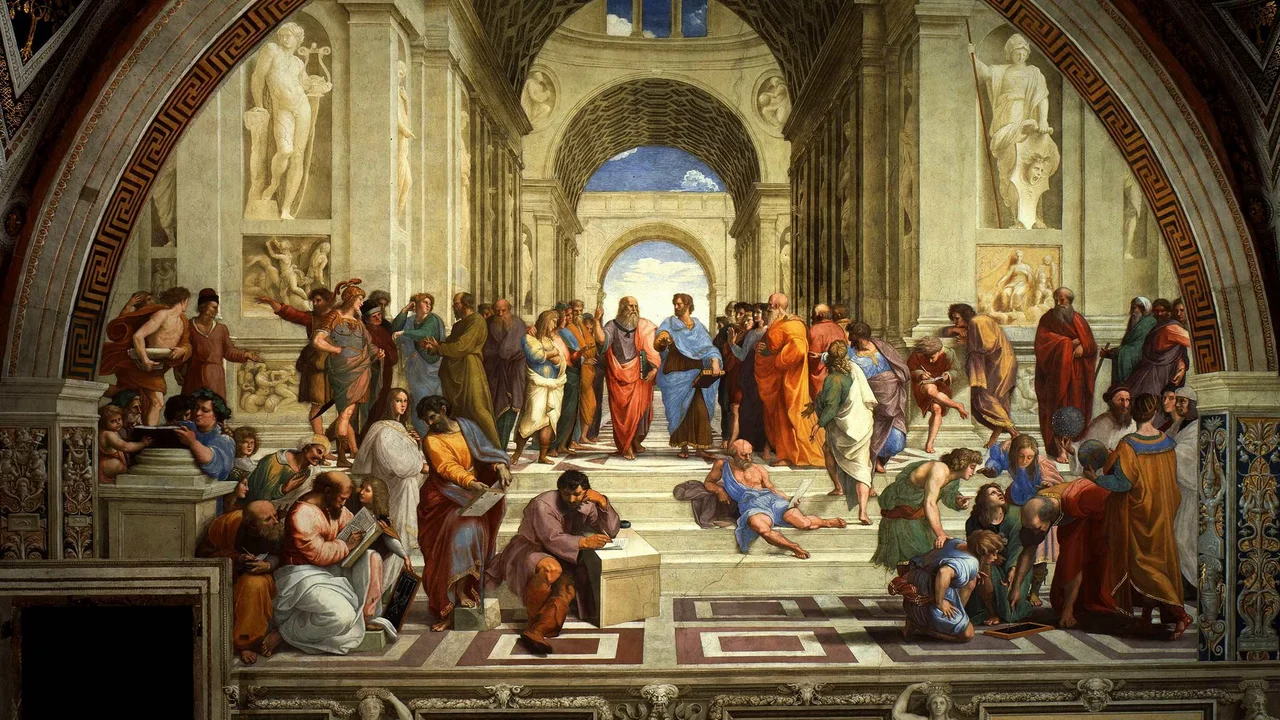
"The Republic" by Plato, narrated by William Sigalis, Neil Schroeder, Al Anderson, Albert Aeed, Henry Akona, Shawn Lacount, Ray Munro<br /><br />"The Republic" poses questions that endure: What is justice? What form of community fosters the best possible life for human beings? What is the nature and destiny of the soul? What form of education provides the best leaders for a good republic? What are the various forms of poetry and the other arts, which ones should be fostered, and which ones should be discouraged? How does knowing differ from believing? Several characters in the dialogue present a variety of tempting answers to those questions. Cephalus, Polemarchus, Thrasymachus, and Glaucon all offer definitions of justice. Socrates, Glaucon, and Adeimantus explore five different forms of republic and evaluate the merit of each from the standpoint of goodness. Two contrasting models of education are proposed and examined. Three different forms of poetry are identified and analyzed. The difference between knowing and believing is discussed in relation to the objects of each kind of thinking.<br /><br />Plato lived in Athens, Greece. He wrote approximately two-dozen dialogues that explore core topics that are essential to all human beings. Although the historical Socrates was a strong influence on Plato, the character by that name that appears in many of his dialogues is a product of Plato’s fertile imagination. All of Plato’s dialogues are written in a poetic form that his student Aristotle called "Socratic dialogue." In the twentieth century, the British philosopher and logician Alfred North Whitehead characterized the entire European philosophical tradition as "a series of footnotes to Plato."<br /><br />Performance based on the translation by Benjamin Jowett, revised by Albert A. Anderson.<br /><br />Public Domain / ℗ 2015 Agora, New Internet Technologies<br />Image is of "The School of Athens" (1509-1511) by Raffaello Sanzio da Urbino (Raphael)<br />U.S. Fair Use: for educational and research purposes only<br /><br />Follow vrilpilled:<br />Twitter - <a href="https://twitter.com/vrilpilled" target="_blank" rel="nofollow">https://twitter.com/vrilpilled</a><br />Gab - <a href="https://gab.com/vrilpilled" target="_blank" rel="nofollow">https://gab.com/vrilpilled</a><br />Telegram - <a href="https://t.me/vrilpilled" target="_blank" rel="nofollow">https://t.me/vrilpilled</a><br />BitChute - <a href="https://www.bitchute.com/channel/vrilpilled/" target="_blank" rel="nofollow">https://www.bitchute.com/channel/vrilpilled/</a><br />Odysee - <a href="https://odysee.com/@vrilpilled" target="_blank" rel="nofollow">https://odysee.com/@vrilpilled</a>:a<br /><br />DASH: XmB3LYPoQVfbdg77pSKU8CHS2NFkUVwZoi<br />XMR: 49QtgnScKy95LPx5EN2xAnHFQzXFVNt3RJfPN3bPimxM5kmSQCDLiKHciZ9wmHdm7AAxr3HKtkgo41NVAPSSoMgx48iDAXq<br />ZEC: t1MVGWQB5c6k7eSxG9KKcSaierw1RdHUmDj<br />ZEN: znbhdEsBa9wZqppYRxqRgNb6PECjCcCSfKx
Author
Content Type
Unspecified
video/mp4
Language
English
Open in LBRY